

There’s nothing quite like the relief of a brand-new air conditioner humming to life on a sweltering summer day. You’ve done your research, picked a reputable brand, and paid a fair price. The technician finishes up, hands you the remote, and you’re feeling good about the investment.
Then, a few weeks later, something feels off. The house rarely reaches the temperature on the thermostat. Or it gets cold fast but feels sticky and humid no matter what. Your energy bill creeps higher. By the time you call someone to take a look, you’re facing repairs that could stretch into the thousands.
What went wrong? In most cases, it wasn’t the brand. It wasn’t the price. It was the size. Learning more before your big purchase can make or break your air conditioning installation in Coral Springs, FL.
The #1 AC Installation Mistake: Buying the Wrong Size Unit
Most people size an AC unit based on one number: square footage. There are even online calculators and rule-of-thumb charts that make this seem like the whole story. It isn’t.
Proper AC sizing requires something called a Manual J Load Calculation: a comprehensive assessment of your home that factors in square footage, yes, but also ceiling height, insulation levels, window size and orientation, local climate, how many people live in the home, and more.
Without it, you’re essentially guessing, and that guess can be expensive either way.
When Your AC Is Too Big: The Short-Cycling Trap
Short Cycling Explained
When an AC unit is too large for a space, it cools the air so quickly that it shuts off before completing a full cycle. Then, because the temperature creeps back up just as fast, it kicks on again, and the cycle repeats over and over. This is called short cycling, and it’s harder on your system than almost anything else.
The compressor is designed to run in longer, steady cycles. Short cycling causes it to start and stop constantly, creating mechanical stress that accelerates wear and tear far beyond what the manufacturer intended.
Humidity
Your air conditioner doesn’t just cool the air; it also removes moisture from it. That dehumidifying process happens during a full cycle. When the unit short cycles, it never gets the chance to do that job properly, leaving your home feeling clammy and muggy even when the temperature reads correctly.
As a result, you get uneven temperatures from room to room, persistently high humidity, and a compressor that wears out years ahead of schedule.
When Your AC Is Too Small: The Endless Run
On the other side of the coin, a unit that’s too small for your home faces a different kind of problem: it simply can’t keep up.
An undersized air conditioner will run almost continuously, straining to reach the target temperature, and on the hottest days, it may never get there at all. You’re left with a system that runs nonstop, driving up your electricity bill month after month, while still not delivering the comfort you were expecting.
Continuous operation doesn’t just waste energy; it destroys the lifespan of the system. A well-matched AC unit that’s properly maintained should last 12 to 15 years. An undersized unit running at full blast all the time might give out in 3 to 5.
On top of that, some manufacturers void their warranties when a unit is documented as improperly installed or sized, meaning you may be left holding the full cost of a premature replacement.
The financial math is sobering: add up a few years of inflated energy bills, an early replacement, and a voided warranty, and you can easily find yourself out several thousand dollars because the unit was too small from day one.
Why This Mistake Happens So Often
Cutting Corners on the Estimate
A proper Manual J Load Calculation takes time and expertise. Contractors who are competing on price often skip it because it adds time to the estimate and requires more knowledge than simply measuring the floor plan.
A quick visit, a glance around the house, and a price based on square footage is faster and cheaper to produce.
Oversimplified Tools
Homeowners who go the DIY route or shop for units on their own tend to rely on packaging labels or online calculators that present oversimplified guidance. These tools can be useful as a starting point, but they’re not a substitute for a proper assessment or professional assistance.
The “Replace Like for Like” Assumption
Third, there’s the common “replace like for like” trap: the assumption that if the old unit was a certain size, the new one should match it exactly.
But what if the old unit was always the wrong size? Or what if insulation improvements, a home addition, or window replacements have changed the home’s heating and cooling needs since then? Replacing the old size without recalculating is a missed opportunity, and potentially a repeat of the same mistake.
How to Make Sure You Get It Right
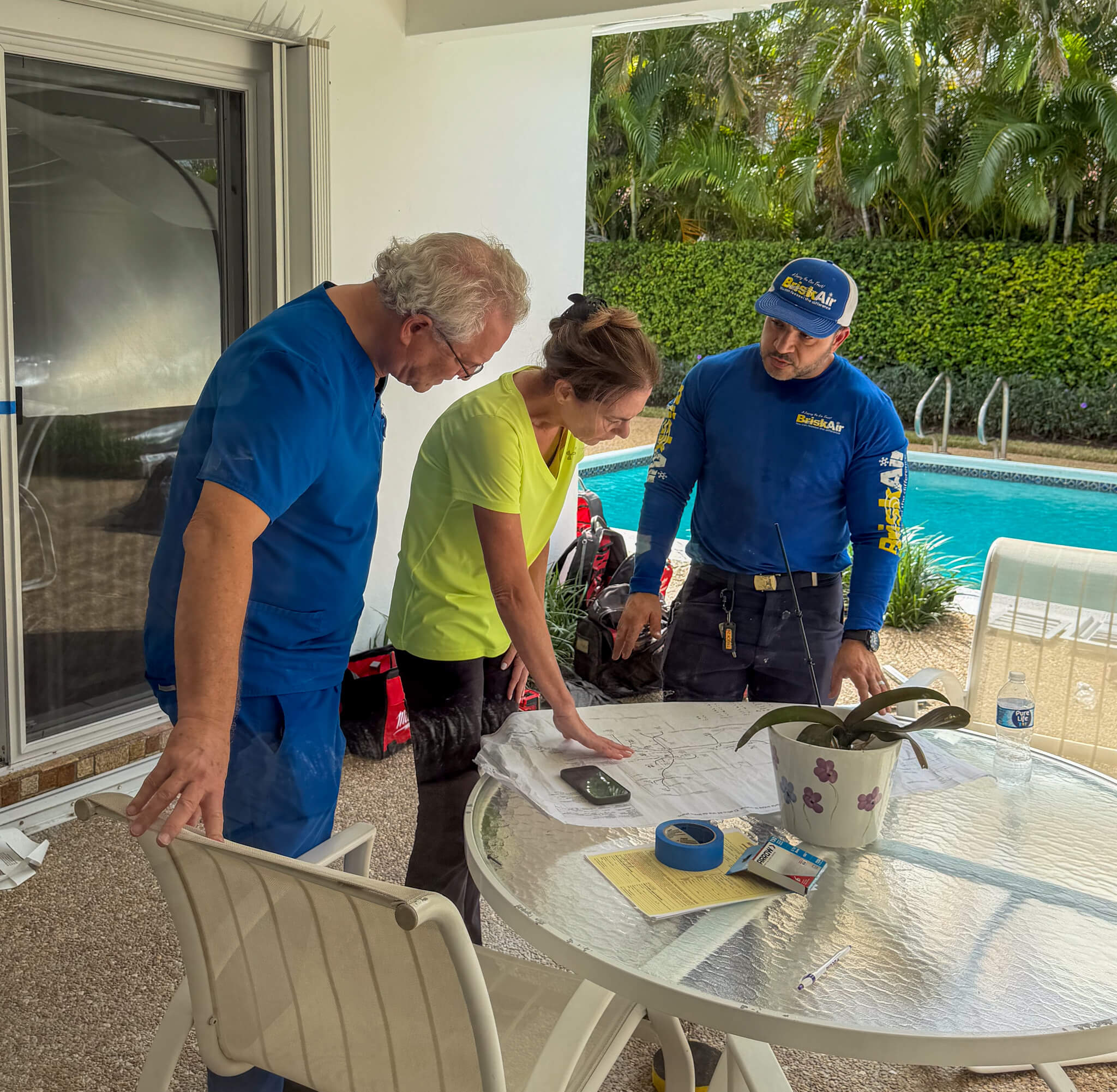
Before any contractor finalizes a quote, ask them: “How are you sizing this unit?” A qualified technician will mention a Manual J Load Calculation without hesitation. If they fumble the answer, say they just go by square footage, or seem unfamiliar with the term, that’s a red flag worth taking seriously.
You should also be cautious of contractors who give quotes after a very brief visit, don’t take any measurements, or offer a price that seems unusually low. Proper installation takes time, and cutting corners at the quoting stage usually means cutting corners on the job.
Finally, look for contractors who are certified by ACCA (Air Conditioning Contractors of America), as they’re trained in proper load calculation and sizing standards.
Other Installation Mistakes Worth Knowing
While sizing is the biggest culprit, a few other installation issues are worth keeping on your radar:
- An incorrect refrigerant charge — too much or too little — can reduce efficiency and damage the compressor over time.
- Poorly sized or leaky ductwork can undermine even a perfectly sized unit by losing conditioned air before it reaches your living spaces.
- The placement of the outdoor unit matters too; a unit crammed into a tight spot or exposed to direct afternoon sun will work harder than it needs to.
Finally, always make sure your installation is permitted. Skipping the permit might feel like a shortcut, but it can create complications when you go to sell your home and may affect your homeowner’s insurance coverage if something goes wrong.
The Bottom Line
A new air conditioner is a significant investment, and it deserves to be done right from the start. The brand on the unit matters far less than whether it was properly sized, correctly installed, and set up to perform the way your home actually needs it to.
Having the right conversation with a knowledgeable technician can be the difference between 15 years of reliable comfort and a repair bill that lands before the first summer is over.
Ready for Air Conditioning Installation in Coral Springs, FL, You Can Trust?
At Brisk Air, we believe your home comfort shouldn’t come with surprises, and that starts with honest, no-pressure guidance from technicians who take the time to do things right. Whether you need a new installation, a repair, or just want to make sure your current system is set up for success, we’re here to help.
Every HVAC replacement and installation comes with our guaranteed flawless performance promise, and we stand behind every single job with 100% satisfaction, no matter the size of the project. We also regularly run specials that can save you real money on the services you need.
Don’t let the wrong installation decision cost you thousands. Reach out to Brisk Air today and get the honest, expert advice your home deserves!